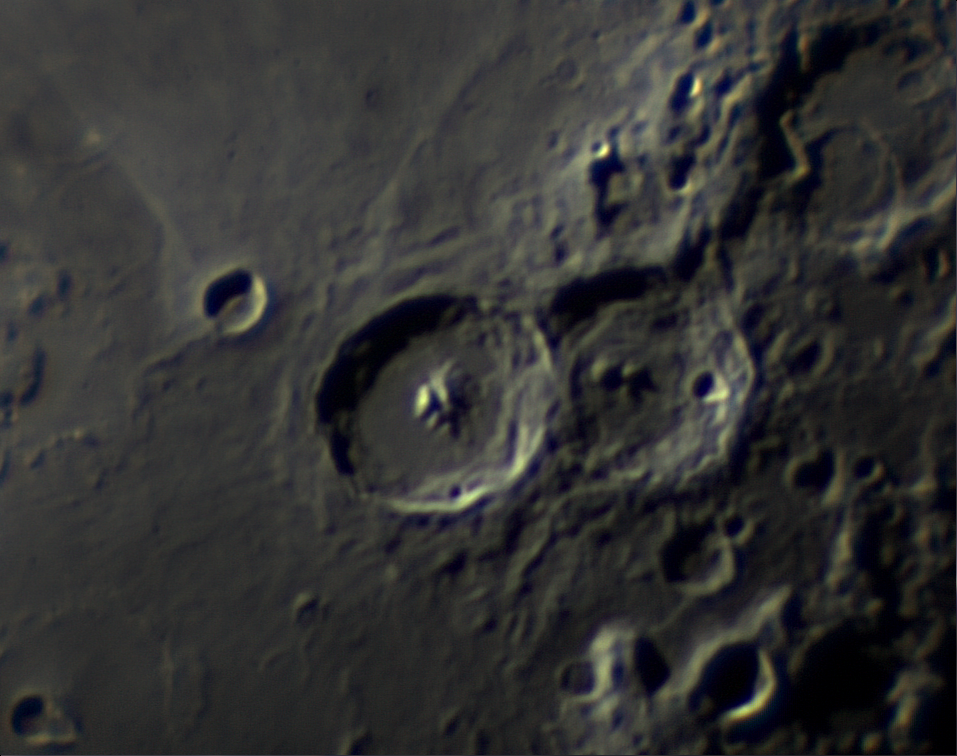
Professional lunar mapping already exists at far higher resolution than anything our network can produce, so this project isn’t about new discovery — it’s about building a consistent, amateur-equipment-resolution reference atlas that other volunteer observers can calibrate their own imaging against.
The Theophilus-Cyrillus pair is a good early target: high contrast, well-documented, and forgiving of minor tracking error. This frame is now part of our internal atlas alongside twelve other named crater regions imaged over the past two years.